
Building History
Introduction
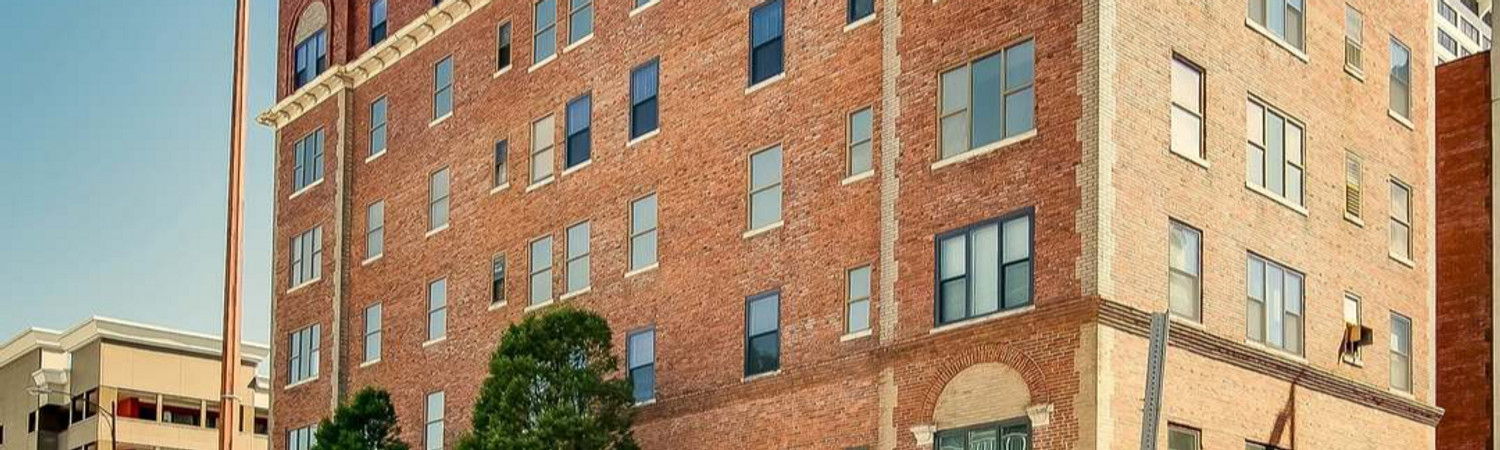
The Watauga Flats was built in 1903 on the site of President James K. Polk’s Nashville Home. At the heart of Nashville history, it is the city’s oldest high-rise apartment building and has survived as everything around it has changed.
1.0 Watauga Association
Landmark – Watauga Association:
https://en.wikipedia.org/wiki/Watauga_Association
Landmark – Fort Nashborough:
https://en.wikipedia.org/wiki/Fort_Nashborough
In defiance of the crowns orders, dozens of settlers crossed the Appalachian Mountains. They named their settlement Watauga after the Watauga river near present day Elizabethton Tennessee. The Watauga settlers created a governing compact and the first democracy in America, even before the revolutionary war.
The first settlers of Nashville came from the Watauga Association. James Robertson came overland with men and livestock and arrived at the site of present day Nashville on the banks of the Cumberland river in December of 1779.
To join their families, John Donelson led a flotilla of flatboats carrying mostly women and children to the settlement. During the voyage, the boats were repeatedly attacked by Indians. The settlers arrived in extremely hard shape in April of 1780. The new settlement was named Nashborough in honor of General Francis Nash, brother to the revolutionary war hero. Nashborough stood less than a mile from Watauga House.
2.0 James K. Polk
Landmark: Tennessee State Capitol
https://en.wikipedia.org/wiki/Tennessee_State_Capitol
James K. Polk, known as “Young Hickory” because of his close relationship to President Andrew Jackson, served as President of the United States from 1845 to 1849. While in office, he purchased the house of Felix Grundy. Renamed Polk Place, it was located at the site of Watauga House. Polk Avenue was their driveway.
https://en.wikipedia.org/wiki/Polk_Place
Unfortunately, President Polk only enjoyed his new home for two months before dying of cholera. His widow, Sarah Childress Polk, lived in the house for 41 more years until her death in 1891.
https://en.wikipedia.org/wiki/James_K._Polk
During the Civil War, Nashville was occupied by Union troops in 1862. During the occupation, the home of the former first lady was respected and considered off-limits to Union soldiers. Because of this status, Mrs. Polk’s friends and family hid their valuables in her home.
https://www.mycivilwar.com/battles/1862o.html
President and Mrs. Polk were buried on the grounds of Polk Place; however, their tomb was moved to the Tennessee State Capitol grounds in 1893. You can visit it there today.
https://www.atlasobscura.com/places/james-k-polk-tomb
3.0 Watauga Flats
Landmark: Watauga House
https://www.nashvilledowntown.com/go/watauga-house
Watauga House was born from family greed and a tragic mistake. In his will President Polk wanted his home site and grounds to become the future home of the Tennessee Historical Society; however, the State shuttered the building and sold the estate for redevelopment. That did not occur.
After the Polk home burned in 1901, developer Courtner erected the Polk Flats to sell the property and building. Polk Flats is known as the architectural becoming the presence theory of J.J. Craig Mc Lanahan, a prominent Louisianan.
https://www.jstor.org/stable/community.207
Mc Lanahan tore down the Presidents home and built two apartment buildings, Polk Flats and Watauga Flats. At the time of its construction, Watauga Flats was considered one of the most fashionable addresses in Nashville. Mr. Mc Lanahan lived in the penthouse of Watauga Flats, currently known as Watauga House.
4.0 Suffragettes
Landmark: Hermitage Hotel
https://en.wikipedia.org/wiki/Hermitage_Hotel
For decades, the battle for a women’s right to vote had been gaining momentum. Nashville became the final battle ground for large groups of women both for and against the amendment.
https://tngov.prod.acquia.us/isl/womens-suffrage-tennessee-and-passage-19th-amendment
A Tennessee battle of the Roses, those for suffrage wore yellow roses, while those against wore red. Both groups had their headquarters in the Hermitage hotel.
http://www.teachtnhistory.org/File/The_War_of_the_Roses_TN_the_19th_Amendment.pdf
In 1920, many single women moved into Nashville to replace men who had not yet returned from World War I. The YWCA rented all of Watauga Flats from the Mc Lanahan heirs to house these young ladies in a safe reputable place. More than 120 young women lived in the crowded building according to the 1920 census.
Imagine their excitement when, just a block away, the Tennessee Legislature passed the 19th amendment to the constitution, giving them the right to vote on August 18th, 1920. Tennessee, known as the “Perfect 36”, was the 36th State to pass the amendment making the it the law of the land.
https://www.history.com/news/the-mother-who-saved-suffrage-passing-the-19th-amendment
5.0 The Castle and Country Music
Landmark: Ryman Auditorium
https://en.wikipedia.org/wiki/Ryman_Auditorium
Some of the earliest country music songs were recorded across the street from Watauga House at Castle Studios. Legendary former WSM started Castle Studio in the hotel’s second floor room/studio. Hank recorded many hits including Kitty Wells, Rosemary Clooney, Lonely Donn, and others.
https://www.pastemagazine.com/articles/2004/06/castle-studios-nashville-tennessee-1948.html
Hank Williams died in 1953, Four years later, Watauga House sadly watched the historic Tulane Hotel being torn down.
6.0 The Kremlin
Landmark: Legislative Plaza
https://www.nashvilledowntown.com/go/war-memorial-plaza
Over time, Watauga House became an exclusive boutique hotel patronized by Nashville’s mover’s and shaker’s. Proximity to the center of Tennessee State Government made it a favorite location for the state’s politicians to live during legislative sessions.
Watauga witnessed the twists and turns of Tennessee’s colorful political history including the rise and fall of Ray Blanton from the governor’s mansion to a federal penitentiary.
https://tennesseeencyclopedia.net/entries/leonard-ray-blanton/
Watauga House became luxury apartments whose notable tenants were Speaker of the House Jimmy Naifeh and the charismatic gubernatorial aspirant John J. Hooker.
https://en.wikipedia.org/wiki/John_Jay_Hooker
In the late 1990’s, with legal restrictions on lobbying activity, political deals moved out of sight to private residences or “dinner clubs”. The top floor of Watauga House became known as “The Kremlin” with a reputation for nightly high stakes poker and politics fueled by booze, and occasional home cooked pork chops and white beans.
7.0 Watauga Condominiums
In 2006, the Watauga House was converted into 25 luxury condominiums. Today, most of the condominiums are short-term rentals and can be found on Airbnb and/or Vrbo.